
Emergency Communication
Brightstar helps protect your people and secure your assets, both of which rely on multiple communication channels working properly during an emergency. Emergency responders need to communicate with each other from inside and outside your facility, even in dead zones and hard-to-reach areas. Building materials, especially high-efficiency ones like low-E glass, can significantly weaken outdoor radio signals from public safety towers, resulting in indoor levels that fall below the International Fire Code.
In-building Emergency Responder Communication Enhancement Systems (ERCES), Distributed Antenna Systems (DAS), and Bi-Directional Amplifiers (BDA) help first responders maintain reliable wireless communication during emergencies and comply with fire codes in your jurisdiction. Area of refuge (AOR) and elevator communication systems also enable building personnel and first responders to communicate with occupants during an incident.
Brightstar provides solutions for each of these communication channels and more, ensuring your business is fully prepared for emergency situations.
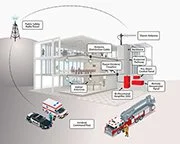
EMERGENCY RESPONDER COMMUNICATION ENHANCEMENT SYSTEM (ERCES)
ERCES enables first responders to communicate effectively during an emergency. Brightstar’s team will work with you to assess your risks and deliver comprehensive in-building ERCES solutions that improve first responder communication and comply with local fire codes.
BI-DIRECTIONAL AMPLIFIER (BDA)
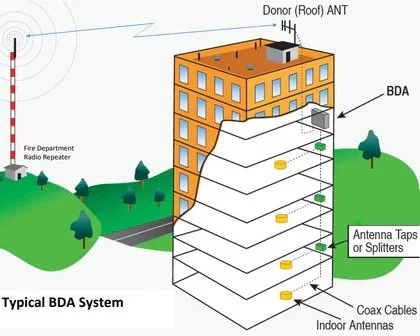
A BDA enhances the signal from the public safety radio antenna, ensuring clear and dependable radio communication even in basements and on the far side of the building. During an emergency, first responders such as law enforcement, firefighters, and EMS personnel cannot afford to lose connection or have dead spots. BDA systems boost radio-frequency signals in both directions, providing reliable communication channels and supporting emergency response efforts that can save lives and protect property.
DISTRIBUTED ANTENNA SYSTEM (DAS)
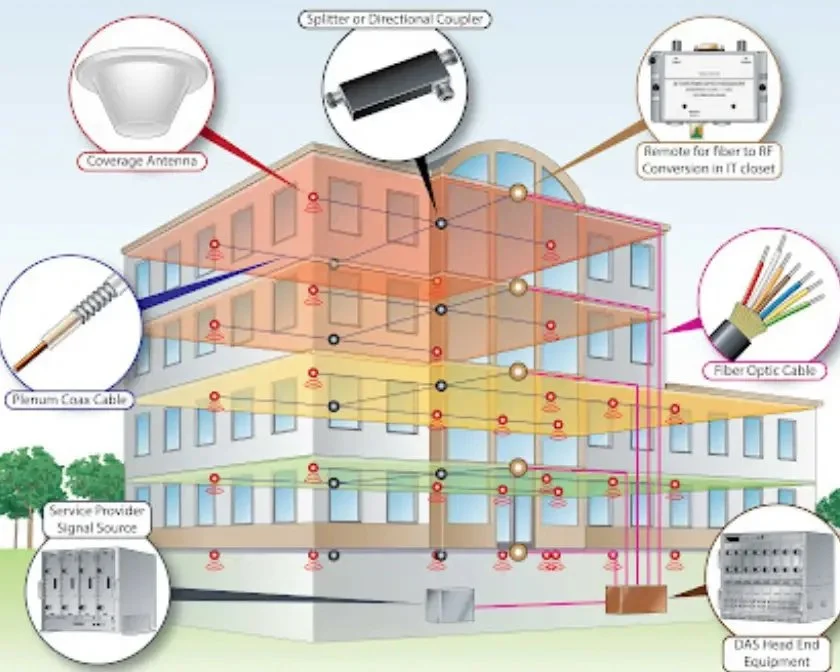
Cellular DAS is designed to improve and expand cellular and wireless coverage within a building or facility. It boosts signal strength and capacity for commercial wireless networks, delivering better mobile phone and data services for occupants and visitors. Brightstar guarantees that your facilities comply with local coverage standards.
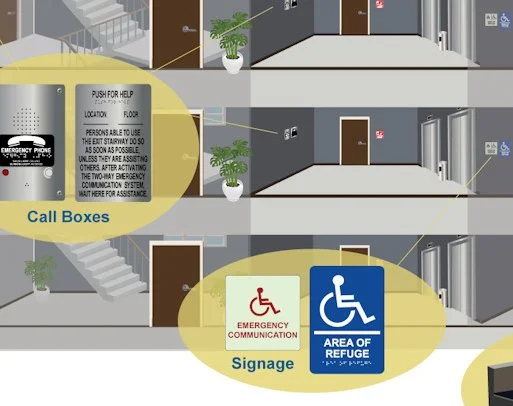
AREAS OF REFUGE (AOR)
Areas of refuge are secure zones within a building where occupants who cannot evacuate can wait safely for emergency responders. These zones are essential during an emergency and must be equipped with a functioning two-way communication system that allows those inside the AOR to communicate easily with responders outside. AOR systems should include two-way voice communication, call buttons for individuals awaiting rescue, and audible and visual signals to indicate when a call button is active.